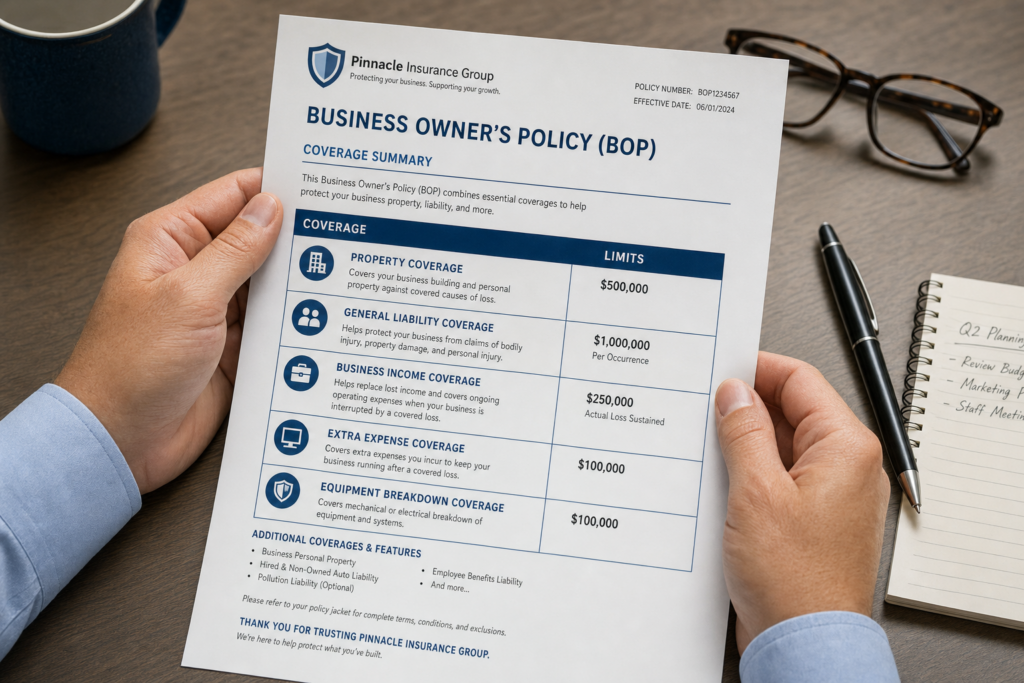
Business insurance is one of those things that feels optional until you need it — at which point it’s too late to buy it. The good news is that most small businesses don’t need a complex or expensive insurance portfolio. What you need depends on your industry, your team size, and how you interact with clients and the public. Here’s a clear-eyed breakdown of the main coverage types and what they actually protect.
General Liability Insurance
General liability (GL) is the foundational coverage almost every business in Hilton Head Island should carry, regardless of industry. It covers three core risks:
- Bodily injury: A client or visitor is injured at your place of business or because of your operations. GL pays for medical costs and legal fees if they sue.
- Property damage: Your business operations damage someone else’s property. GL covers repair or replacement costs and associated legal fees.
- Personal and advertising injury: Claims that your advertising, marketing, or statements caused reputational harm — libel, slander, copyright infringement in your marketing materials.
A standard GL policy typically provides $1 million per occurrence and $2 million aggregate. Premiums for a small service or retail business often run $400 to $1,500 per year, though they vary by industry and revenue. Many landlords and clients will require proof of GL coverage before doing business with you. According to the Insurance Information Institute (III), general liability is the most common type of commercial insurance for small businesses.
Business Owner’s Policy (BOP)
A Business Owner’s Policy bundles general liability with commercial property insurance into a single package — and it’s usually cheaper than buying each separately. The property component covers your physical assets: equipment, furniture, computers, inventory, and improvements to your leased space, against risks like fire, theft, and certain weather events.
The SBA recommends that most small businesses consider a BOP as their starting insurance package. It’s designed specifically for small and medium businesses and is available from most commercial insurers. Not every business qualifies — some high-risk industries aren’t eligible — but if you do qualify, a BOP is typically the most cost-effective way to get your core coverage in place. Annual premiums for a basic BOP commonly run $500 to $3,500 depending on business size, location, and industry.
One important note: a BOP does not include workers’ compensation, professional liability, or commercial auto coverage. Those require separate policies.
Workers’ Compensation Insurance
If your business in Hilton Head Island has employees, workers’ compensation is almost certainly required by your state — not optional. Workers’ comp covers medical expenses and a portion of lost wages when an employee is injured on the job. It also protects you from being sued by an injured employee in most circumstances.
Requirements vary by state, so check your South Carolina regulations. Most states require coverage as soon as you hire your first W-2 employee, though some states have exceptions for very small employers or specific industries. Independent contractors are generally not covered under workers’ comp, but misclassifying an employee as a contractor to avoid coverage is a serious legal risk. Your state’s workers’ compensation board or your state’s SBA office can clarify the requirements that apply to your specific situation.
Premiums are calculated as a percentage of payroll and vary widely by job classification — a desk worker costs far less to insure than a construction laborer.
Professional Liability (Errors and Omissions) Insurance
General liability does not cover claims that your professional work, advice, or services caused a client financial harm. That’s what Professional Liability insurance — also called Errors and Omissions (E&O) insurance — is for.
If you are in a service business — consulting, accounting, marketing, IT, design, real estate, legal, or any field where clients rely on your expertise — professional liability is essential. A client who claims your advice cost them money or that your deliverable didn’t meet contracted standards can file a lawsuit regardless of whether you actually did anything wrong. Defense costs alone can be financially devastating even when the claim is ultimately dismissed.
According to the Insurance Information Institute, professional liability claims are among the fastest-growing categories of commercial litigation for small businesses. Coverage typically starts around $500 to $1,000 per year for low-risk service businesses and increases with revenue and claim exposure.
Coverage Small Businesses Often Overlook
Beyond the four main types above, a few others are worth knowing about:
- Cyber Liability: If you store customer data, accept credit card payments, or operate any digital systems, a cyber policy covers breach notification costs, customer notification, regulatory fines, and recovery expenses. The III notes that small businesses are increasingly targeted because they’re perceived as having weaker security than large corporations.
- Commercial Auto: Your personal auto policy almost certainly does not cover accidents that happen while using your vehicle for business purposes. If employees drive their own vehicles on company business, you may also need hired and non-owned auto coverage.
- Business Interruption: Often bundled into a BOP upgrade, business interruption insurance replaces lost income if a covered event (fire, major equipment failure) forces you to temporarily close.
What You Probably Don’t Need Yet
Don’t let an insurance agent sell you every policy in the catalog. A solo freelancer with no employees and a home office likely doesn’t need workers’ comp or commercial auto on day one. A B2B software consultant probably doesn’t need the same property coverage as a retail shop with expensive inventory. Match your coverage to your actual risk profile, review it annually as your business grows, and get competing quotes — premiums for identical coverage can vary significantly between carriers.
Getting the Right Advice in Hilton Head Island
An independent insurance broker — one who works with multiple carriers rather than representing a single company — can shop the market on your behalf and explain trade-offs honestly. The SBA recommends working with licensed professionals and comparing at least three quotes before purchasing commercial coverage. Your industry association may also offer group coverage at reduced rates. Start with the SBA’s insurance guide at sba.gov for a clear overview of requirements and options before you shop.