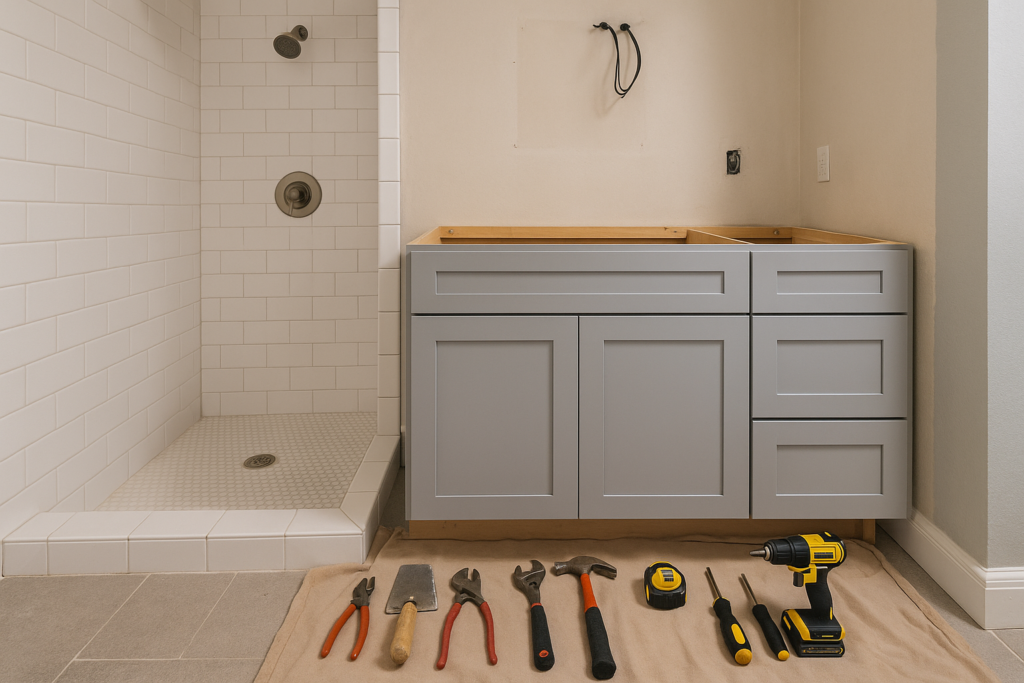
For homeowners in Hilton Head Island considering a bathroom renovation, embarking on a DIY project can be both rewarding and challenging. A bathroom remodel is classified as an advanced DIY project, typically taking more than one day to complete and requiring more time per step than professional work. Understanding the sequence of tasks involved is crucial for a successful renovation.
The remodel sequence begins with planning and budgeting. Homeowners should take the time to outline their vision and set a realistic budget before diving into the demolition phase. It’s essential to note that building permits are required for many bathroom renovations; thus, checking local codes early and applying for necessary permits before starting work is advisable.
Once the planning is complete, the next step is demolition. This phase involves removing existing fixtures and surfaces to prepare for the new layout. Following demolition, homeowners will need to address plumbing and electrical rough-ins. Technical work, such as relocating fixtures, is often best handled by licensed contractors to ensure safety and compliance with local codes.
After the rough-ins are complete, it’s time to install drywall. For shower and tub areas, moisture-resistant cement board should be used as backer, while standard drywall can be applied to other walls. Once the drywall is up, homeowners can proceed with painting. It is recommended to use a satin or semi-gloss finish paint to withstand the humidity typically found in bathrooms.
Tile installation is a significant part of the renovation process. The sequence for tile installation follows a wall-first, then floor approach. Homeowners should ensure that caulk is applied at corners where the tile meets the tub or shower to prevent water damage. This attention to detail will help maintain the integrity of the renovation over time.
As the remodel progresses, the installation of the shower or tub comes next, followed by the vanity and toilet. Finally, finishing accessories can be added to complete the look of the bathroom. One important feature that should not be overlooked is the installation of an exhaust fan. These fans are essential for removing moisture, preventing mold and mildew, and can now include features like humidity sensors, adjustable speeds, lights, heaters, and even Bluetooth speakers for added convenience.
By following these steps, homeowners in Hilton Head Island can successfully navigate their bathroom renovation project. With careful planning, attention to detail, and the right resources, a DIY bathroom remodel can enhance the comfort and value of a home, making it a worthwhile endeavor for those ready to take on the challenge.