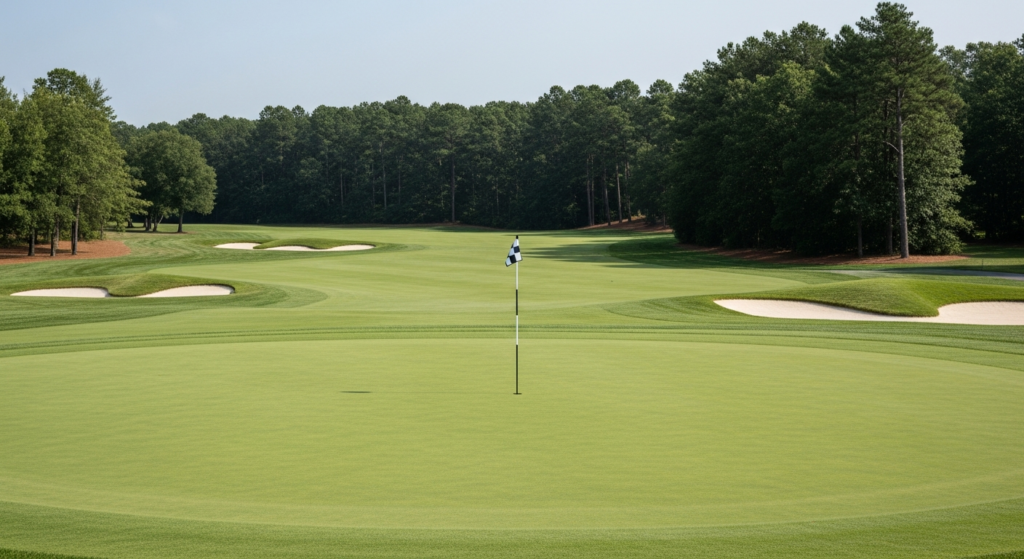
A foundational guide to golf course conduct, titled “A Golf Course Etiquette Manual” and marked “Rev. 3/2013,” outlines practices designed to enhance player enjoyment, maintain course conditions, and ensure safety across the greens. The manual serves as a reference for golfers navigating the diverse array of courses, including those found throughout Hilton Head Island.
The guidance begins before a player even steps onto the first tee, advising arrival with sufficient time to complete necessary preparations—typically five to 15 minutes—before the scheduled tee time. This preparatory period allows for check-in, warm-up, and a smooth transition to the course, a crucial element for maintaining flow, especially on busy resort courses that are a hallmark of Hilton Head Island’s tourism economy.
Pace of play is a central tenet of the manual. It asserts that most 18-hole courses can be completed in four hours or less by a group of four, provided players maintain an appropriate pace. To facilitate this, the manual recommends specific actions for common on-course scenarios: abandoning the search for a lost ball after five minutes to avoid undue delays, and hitting a provisional ball immediately if a shot might be out of bounds or lost outside a water hazard. These measures are critical for preventing bottlenecks and ensuring a pleasant experience for all golfers, particularly on the highly frequented courses across Hilton Head Island.
Safety protocols are also clearly delineated. Players are instructed to always ensure that no one is within reach of a club during a swing, a fundamental rule to prevent accidental injury. Furthermore, golfers must wait until players ahead are well out of range before hitting their own shots. In instances where a ball in motion might strike someone, the manual mandates shouting “FORE!” as a universal warning, a practice vital for preventing accidents on crowded fairways.
Beyond personal conduct and pace, the manual places significant emphasis on course maintenance and preservation. It details several responsibilities for players to uphold the quality of the playing surface. These include replacing divots, the small pieces of turf dislodged during a swing, and carefully raking bunkers after playing a shot from the sand to smooth out footprints and club marks. Repairing ball marks on putting greens, caused by the impact of a golf ball, is another key directive, as is generally avoiding damage to greens and holes. The manual also provides guidance on golf cart usage, advising players to keep carts away from tees and greens and to adhere to prescribed cart policies, such as the 90-degree rule where applicable, which helps distribute cart traffic and protect turf.
The principles outlined in this manual are broadly applicable to golf courses worldwide, but they hold particular relevance for a destination like Hilton Head Island, where golf is not only a recreational activity but a significant economic driver. The island’s reputation as a premier golf destination, home to more than 25 courses including the renowned Harbour Town Golf Links, relies heavily on the quality of its facilities and the experience it offers to both residents and millions of annual visitors.
Why it matters in Hilton Head Island
Adherence to established golf etiquette is paramount for maintaining the high standards of play and course conditions that define Hilton Head Island’s golf landscape. For institutions like the Sea Pines Resort, which operates multiple championship courses including Harbour Town Golf Links, consistent application of these guidelines ensures that the significant investment in course maintenance translates into an exceptional experience for every golfer. The island’s economy, heavily reliant on golf tourism, benefits directly when players respect the course and their fellow competitors, fostering an environment that encourages repeat visits and upholds Hilton Head Island’s status as a world-class golf destination. These practices contribute to preserving the pristine conditions expected by players, from casual vacationers to participants in events like the RBC Heritage, ensuring the longevity and appeal of the island’s golf offerings.