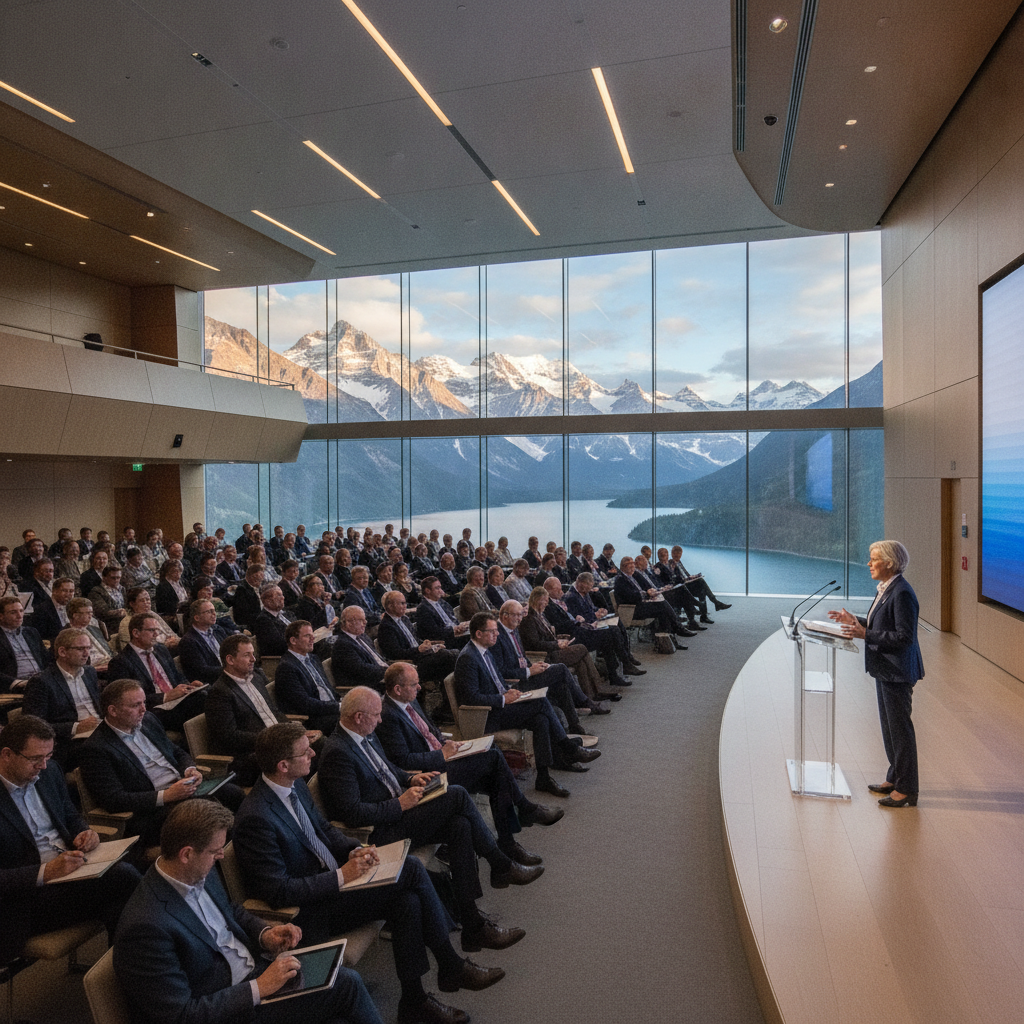
Federal Reserve Chairman Kevin Warsh delivered keynote remarks on August 28, 2026, at the Jackson Hole Economic Policy Symposium, marking his 100th day in office by outlining a new approach to monetary policy and the economy. The Chairman emphasized a shift away from extensive forward guidance, advocating for a more circumscribed role for such communications in normal economic times.
Warsh detailed six key principles that will guide the Fed’s conduct of monetary policy. These include ensuring that data used for policy decisions is relevant, contemporaneous, accurate, and actionable, and focusing on trends rather than isolated data points. He also stressed the importance of aligning aggregate demand with aggregate supply, while acknowledging the imprecision in evaluating this balance. The Chairman reaffirmed the Fed’s firm 2 percent price-stability objective, measured by the personal consumption expenditures (PCE) price index, and its responsibility for maximum employment, viewing both as complementary goals. Short-term interest rates are identified as the primary tool for achieving this dual mandate, with unconventional policies reserved for genuine crises. Finally, Warsh highlighted the continued relevance of money in monetary policy, urging attention to money created by both the central bank and the broader financial system, and advocated for a quieter, more purposeful Fed in its communications to enhance credibility.
In his assessment of the current economy, Warsh noted that labor markets are stable and output is solid, a unanimous view shared by the Federal Open Market Committee (FOMC) in their July minutes. However, inflation remains too high, with the 12-month change in the PCE price index at 3.7 percent and the six-month change at 4.1 percent, both exceeding the 2 percent target. Business capital expenditures, particularly in AI-related infrastructure, are rising rapidly, with a 9 percent growth rate in investment in equipment and intangibles over the past four quarters. Corporate profits for S&P 500 firms have grown by over 20 percent in the past year, and credit spreads on corporate bonds and leveraged loans are near historical lows. Real consumer spending has increased by more than 2 percent over the past four quarters, and the jobless rate stands at 4.1 percent, remaining low for several years. Despite these strengths, Warsh emphasized that the Fed’s predominant focus must be on bringing inflation down to its target, noting that underlying inflation trends have shown only modest improvement over the past two years.