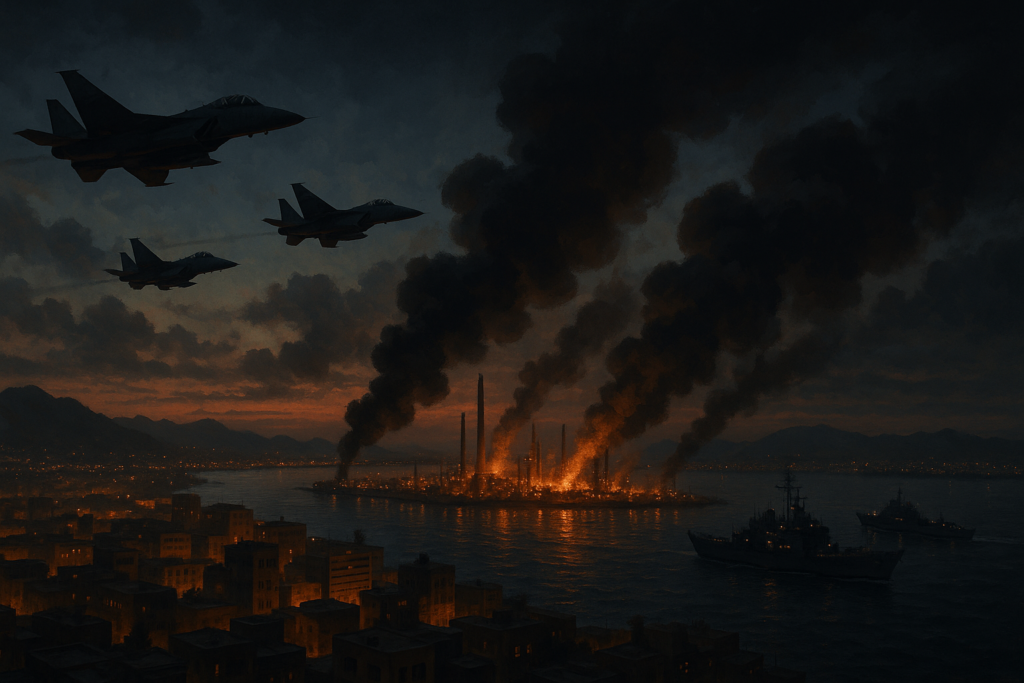
Tensions between the United States and Iran have escalated significantly following a series of military exchanges that occurred on May 28, 2026. US Central Command forces intercepted four Iranian one-way attack drones near the Strait of Hormuz and subsequently struck an Iranian ground control station in Bandar Abbas, Iran. These actions are viewed within the context of a ceasefire that was established in April 2026 to end a conflict that had disrupted shipping in the vital waterway for approximately three months.
US officials have characterized the strikes as ‘measured, purely defensive, and aimed at upholding the ceasefire.’ This assertion comes as the US seeks to maintain stability in the region, which is crucial for global oil transportation. The recent military actions mark the most serious clashes since the ceasefire was implemented, raising concerns about the potential for renewed hostilities.
In response, Iran’s Islamic Revolutionary Guard Corps announced a retaliatory strike on a US military installation. Kuwait, a key US ally in the region, reported that it responded to missile and drone attacks on the same day. The situation underscores the precarious nature of the ceasefire, with both sides engaging in military posturing amid ongoing peace negotiations in Doha.
Iran has condemned the US strikes, labeling them as ‘a serious breach of the ceasefire.’ Despite the heightened tensions, Iranian officials have indicated a willingness to continue diplomatic efforts aimed at achieving a lasting peace. Earlier in the week, US forces had already conducted strikes against Iranian missile sites and mine-laying vessels in southern Iran, actions that Centcom described as necessary for self-defense.
As military exchanges continue, the international community watches closely, aware that any miscalculation could lead to a broader conflict in the region, which could have significant implications not only for Middle Eastern stability but also for global energy markets. The situation remains fluid, and both sides appear to be weighing their next moves carefully, balancing military action with diplomatic overtures.
For residents of Hilton Head Island, the unfolding situation serves as a reminder of the interconnectedness of global events and their potential impact on local economies and security. As a popular tourist destination, Hilton Head Island’s economy could be affected by fluctuations in oil prices and broader geopolitical tensions, making it essential for locals to stay informed about international developments.