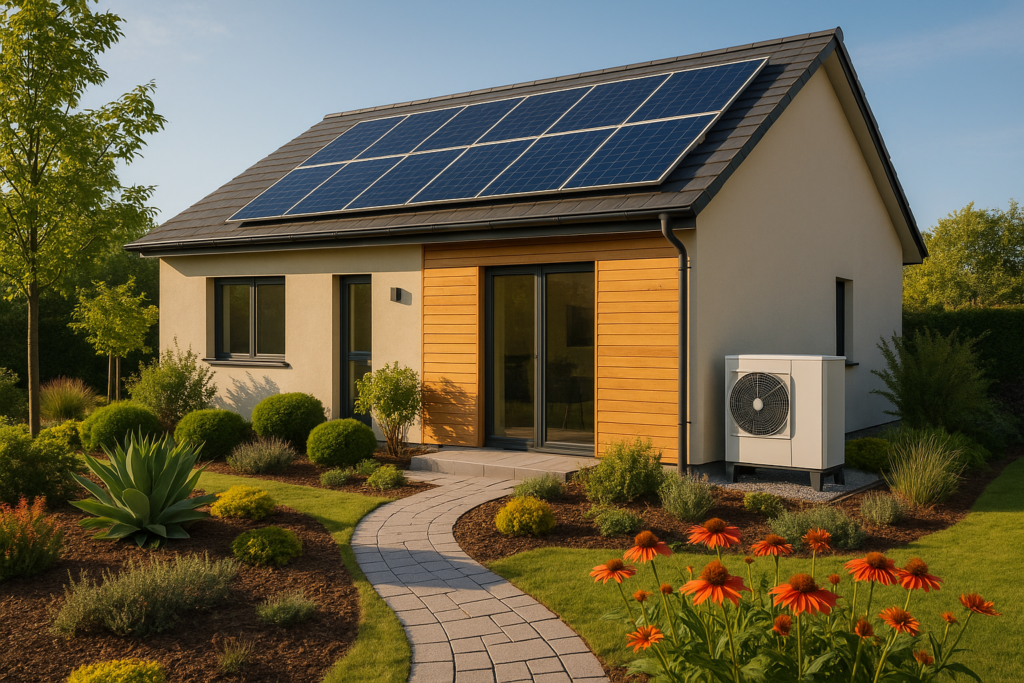
As homeowners in Hilton Head Island consider renovations, they may be pleased to learn about the federal tax credits available for energy-efficient home improvements. Through the end of 2025, homeowners can claim up to $3,200 per year in tax credits for qualifying upgrades, making it an opportune time to invest in energy efficiency.
The Energy Efficient Home Improvement Credit allows homeowners to claim 30% of the costs associated with eligible improvements. This includes significant upgrades such as heat pumps (up to $2,000), windows and skylights ($600), exterior doors ($500), insulation, and home energy audits ($150). This credit is particularly beneficial for Hilton Head residents looking to enhance their homes while also reducing energy consumption.
In addition to the Energy Efficient Home Improvement Credit, the Residential Clean Energy Credit offers a 30% tax credit for solar energy systems, geothermal heat pumps, small wind turbines, fuel cells, and battery storage. Homeowners should note that any excess credit from this category can be carried forward to future tax years, providing even more financial flexibility.
Importantly, there is no lifetime dollar limit for the energy efficiency home improvement credit. This means that homeowners can claim the maximum annual credit every year as long as they make eligible improvements. However, it’s essential to keep in mind that these credits are nonrefundable and cannot exceed the taxpayer’s annual tax liability for most categories.
To qualify for these credits, improvements must be made to an existing home that serves as the taxpayer’s primary residence. New construction does not qualify for the energy efficiency improvement credit, which is a critical detail for those considering building new homes in the Hilton Head area.
For installations completed in 2025, homeowners will need to ensure that manufacturers provide a Qualified Manufacturer Identification Number (QMID), which must be reported on the tax return. This requirement emphasizes the importance of keeping accurate records and ensuring compliance with IRS guidelines.
Homeowners looking to claim these credits will need to file IRS Form 5695 for the tax year in which the improvement is installed, rather than when the purchase was made. This distinction is vital for proper tax reporting and maximizing the benefits of these credits.
As Hilton Head Island continues to grow and evolve, these federal tax credits present a valuable opportunity for homeowners to enhance their properties while contributing to energy conservation efforts. By taking advantage of these incentives, residents can not only improve their homes but also potentially reduce their overall energy costs in the long run.
For more detailed information on these credits and eligibility requirements, homeowners can refer to the IRS website and the Energy Star program, which provide comprehensive guidance on federal tax credits for energy-efficient home improvements.