Catch and release fishing is not just a popular pastime for anglers on Hilton Head Island; it is also a vital conservation strategy aimed at preserving fish populations. However, simply letting a fish go does not guarantee its survival. The actions taken before, during, and after landing a fish critically affect its chances of living after being released.
One of the key practices to improve fish survival is the use of specific types of hooks. Circle hooks, barbless hooks, or hooks with crimped barbs are recommended as they not only increase survival rates but also make the process of hook removal easier. Using non-stainless steel hooks can also be beneficial, as they corrode over time and may fall out if a fish escapes before being dehooked, thereby reducing harm to wildlife.
When landing a fish, the type of net used can make a significant difference. Rubber or knotless mesh landing nets are preferable because they cause less damage to a fish’s eyes, fins, scales, and protective mucus coating compared to traditional netting. This is particularly important for maintaining the health of the fish after it is released back into the water.
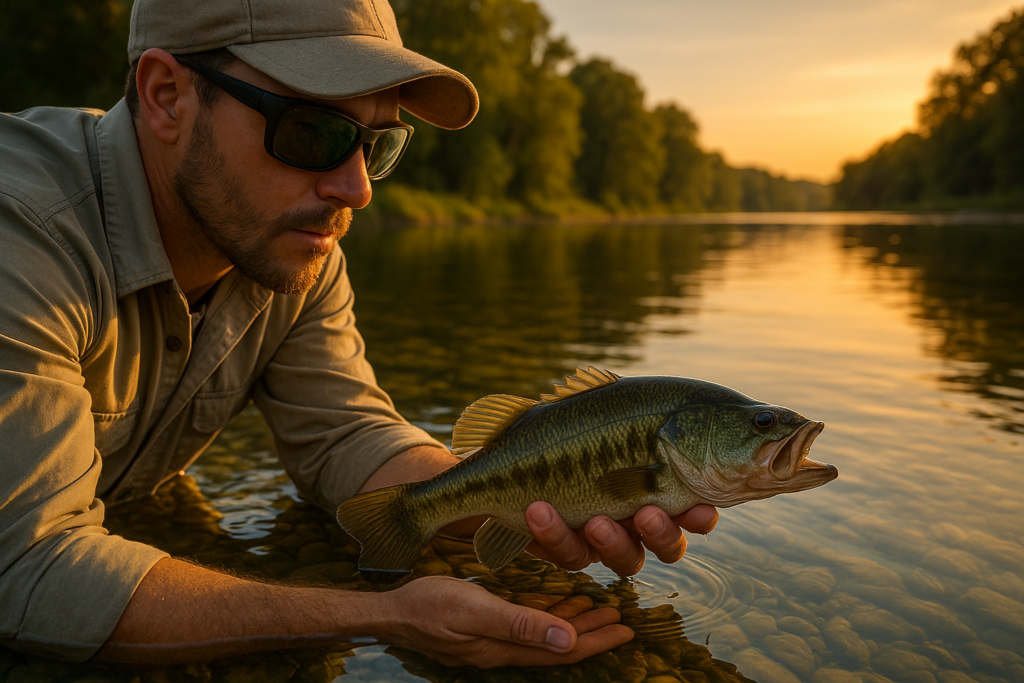
Air exposure is another critical factor in fish survival. It is recommended that fish should be kept out of water for less than 60 seconds. Additionally, anglers should handle fish only with wet hands to minimize damage, and should avoid touching the eyes and gills, which are sensitive areas. It is also essential to support the fish’s body along its full length rather than suspending it by its lip or mouth, as this can cause serious injury.
For those fishing in deeper waters, it is important to be aware of barotrauma, a condition that occurs when fish are caught from depths greater than 30 feet. This condition is characterized by a build-up of gases in the fish’s body, which can prevent it from swimming back down. To counteract this, anglers should use a descender device to recompress the fish before release.
If a fish appears sluggish after being caught, it is advisable to resuscitate it by holding it facing into the current until it regains strength and can swim away on its own. This technique can significantly increase the chances of survival for the fish.
As fishing continues to be a cherished activity on Hilton Head Island, adopting these best practices for catch and release can help ensure that fish populations remain healthy for future generations of anglers. By being mindful of how we handle and release fish, we can contribute to the conservation of our local aquatic ecosystems while enjoying the sport we love.
For more information on best practices for catch and release fishing, visit the National Oceanic and Atmospheric Administration (NOAA) and the Pacific Salmon Foundation (PSF).