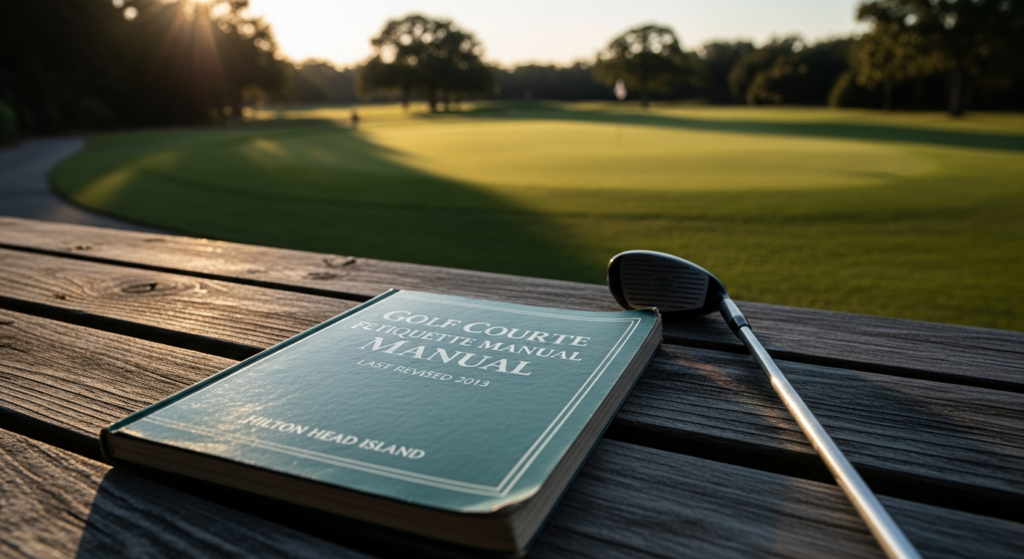
A foundational document titled “A Golf Course Etiquette Manual,” last revised in March 2013, provides detailed guidance designed to enhance the experience for all participants on the links. The manual, which serves as a benchmark for proper conduct, addresses key aspects of the game, from arrival at the course to maintaining its pristine conditions, all with the overarching goals of improving player enjoyment, ensuring safety, and preserving the integrity of the course.
The principles outlined in the manual are particularly relevant in a region like Hilton Head Island, known globally for its extensive array of golf courses and its vibrant golf tourism economy. With more than 25 courses, including renowned venues like Harbour Town Golf Links, the island attracts millions of visitors annually, making consistent adherence to etiquette crucial for managing high player volumes and maintaining the quality of play.
One of the primary areas of focus within the manual is the pace of play, a critical factor in ensuring an enjoyable experience for all golfers. Players are advised to arrive with sufficient preparation time, typically between five and 15 minutes before their scheduled tee time, to complete necessary advance work. This includes checking in, warming up, and being ready to play promptly. The manual asserts that most 18-hole courses can be completed in four hours or less by a group of four players, provided groups maintain the correct pace throughout their round. To facilitate this, specific recommendations are made, such as abandoning the search for a lost ball after five minutes to avoid undue delays. Furthermore, players are encouraged to hit a provisional ball when a shot may be out of bounds or lost outside a water hazard, a practice that saves significant time by eliminating the need to return to the previous hitting location.
Safety is another paramount concern addressed comprehensively in the manual. Golf, while often perceived as a leisurely sport, involves swinging clubs at high speeds and hitting balls over considerable distances, necessitating strict safety protocols. Players are instructed to ensure that no one is within reach of a club during a swing, preventing accidental injuries. It is also a fundamental rule to wait until players ahead are well out of range before hitting a shot, particularly on longer holes. In instances where a ball in motion might strike someone, the manual mandates shouting “FORE!” loudly and clearly, a universal warning designed to alert others to potential danger.
Beyond personal conduct and safety, the manual places significant emphasis on course maintenance, underscoring the shared responsibility of golfers in preserving the quality of the playing surface. This includes a series of specific actions: replacing divots, which are pieces of turf dislodged during a swing, to help the grass recover; carefully raking bunkers after playing from them to smooth the sand for the next player; and repairing ball marks on putting greens, which are indentations caused by the impact of a golf ball. These practices are vital for maintaining the aesthetic appeal and playability of the course. Additionally, golfers are advised to avoid causing damage to greens and holes, for instance, by not dragging their feet or dropping clubs. The manual also details policies regarding golf carts, instructing players to keep carts away from tees and greens to protect sensitive turf and to follow prescribed cart paths and rules, including the common 90-degree rule where applicable, which directs carts to stay on the path until they are at a 90-degree angle to their ball, then drive directly to it.
These guidelines collectively aim to foster an environment of respect and efficiency on the golf course, ensuring that the experience remains enjoyable and fair for all participants, while also safeguarding the significant investment in course maintenance. For a destination like Hilton Head Island, where golf is integral to the local identity and economy, adherence to such etiquette is not merely a courtesy but a contribution to the enduring appeal of its world-class facilities.
Why it matters in Hilton Head Island
The principles outlined in “A Golf Course Etiquette Manual” hold particular significance for Hilton Head Island, a community deeply intertwined with its golf courses. With major employers like Sea Pines Resort LLC managing extensive golf operations, the consistent application of these etiquette standards directly impacts the quality of the visitor experience and the daily operations of these significant economic drivers. Adherence to guidelines on pace of play, safety, and course care helps maintain the high standards expected by both residents and the millions of tourists who frequent the island’s courses each year. This collective commitment to golf etiquette ensures the longevity and reputation of Hilton Head Island as a premier golf destination, directly supporting the hospitality sector and the broader economic health of Beaufort County.