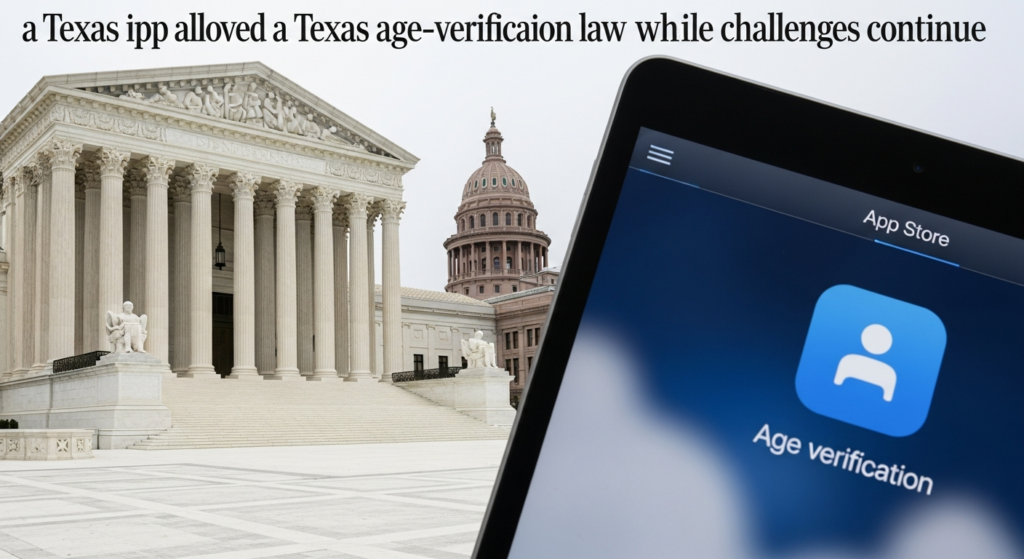
The Supreme Court has permitted a Texas law mandating age verification for app-store access by minors to proceed, even as legal challenges against the statute continue. The decision, issued Friday, July 10, 2026, means the law, which places new duties on app stores regarding age checks for users under 18, will remain in effect while its constitutionality is debated in lower courts.
The Texas legislation is designed to implement safeguards for minors accessing digital content, requiring app providers to verify the age of users and restrict access to certain material for those identified as underage. The specifics of the law’s implementation involve a range of technical and logistical considerations for companies operating app stores.
The Supreme Court’s action does not resolve the underlying legal questions surrounding the law, but rather allows it to be enforced during the ongoing litigation. This interim decision highlights the complex legal landscape emerging as states attempt to regulate digital platforms, particularly concerning the protection of minors online.
While the immediate impact of this ruling is in Texas, the broader implications of such age-verification mandates are being observed nationally. Discussions around digital safety for children and adolescents are prevalent in communities across the country, including Hilton Head Island. Parents, educators, and local officials in places like Hilton Head Island often grapple with how best to ensure a safe online environment for young people, balancing access to educational and social tools with concerns about inappropriate content and data privacy.
The legal challenges to the Texas law are expected to continue, with arguments likely to focus on issues such as free speech, privacy, and the practical feasibility of age-verification technologies. The outcome of these challenges could set precedents for similar legislative efforts in other states.
For residents of Hilton Head Island, this development underscores the evolving nature of digital regulation. While specific local ordinances or state laws in South Carolina regarding app-store age verification are distinct from the Texas statute, the national conversation around these issues can influence local policy discussions and parental approaches to digital device management.
### Why it matters in Hilton Head Island
The Supreme Court’s decision, while pertaining to a Texas law, resonates with ongoing discussions about digital safety for minors in Hilton Head Island. For institutions like the Beaufort County School District, which serves thousands of students across the Lowcountry, the challenges of managing student access to digital content and ensuring online safety are a constant concern. Parents in neighborhoods such as Sea Pines and Palmetto Dunes frequently navigate the complexities of their children’s online interactions. This national legal development contributes to a broader dialogue that could inform future policy considerations or educational initiatives aimed at protecting young people on digital platforms within Hilton Head Island and the wider Beaufort County area. The precedent set by such laws, even if originating elsewhere, often sparks local conversations about best practices and potential safeguards for the community’s youth.