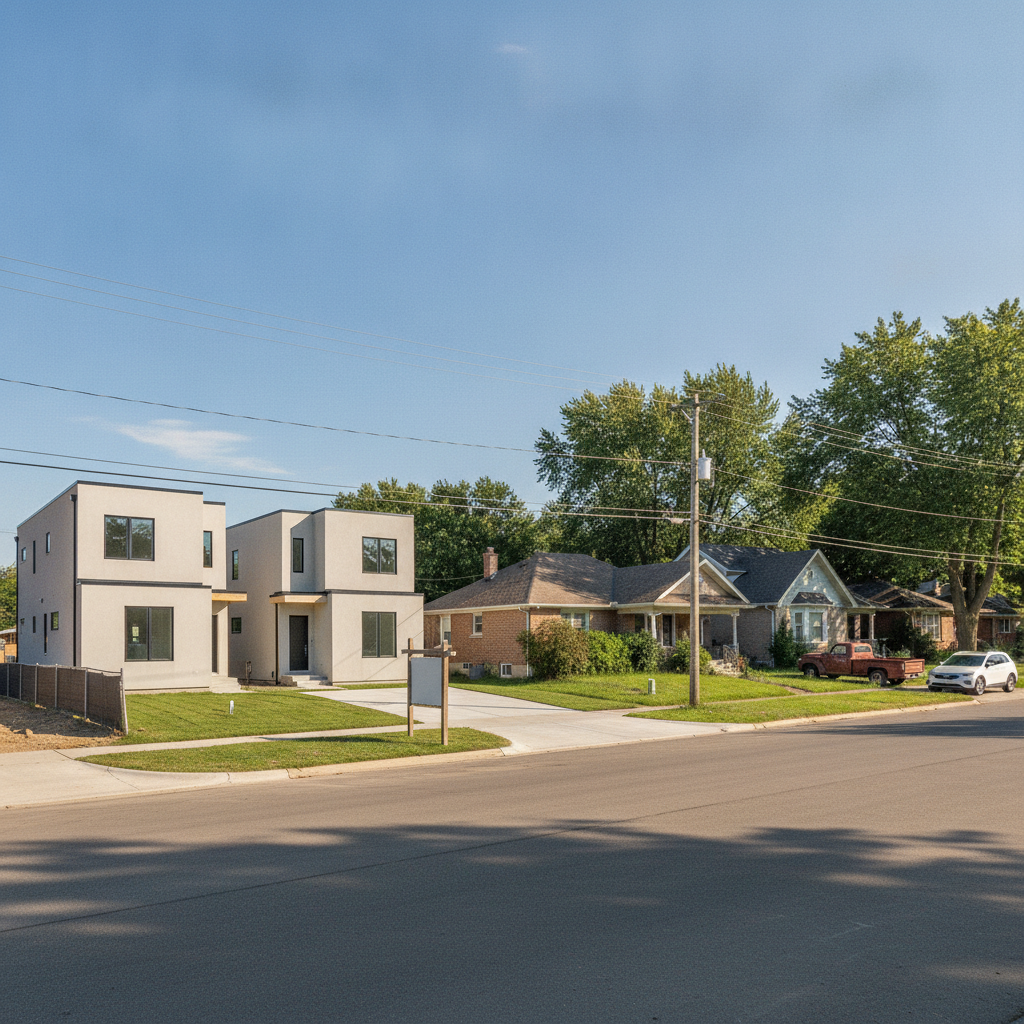
A recent analysis published on August 26, 2026, highlights how builder mortgage rate buy-downs are creating a distorted view of housing prices, impacting both new and existing home sales. These incentives allow new homes to sell at prices significantly higher than what builders actually realize, which can mislead the broader market.
The practice of builders offering subsidized mortgage rates, while seemingly a marketing tactic, has deeper implications for the housing market’s price discovery. Major public homebuilders, such as Lennar and D.R. Horton, are using these buy-downs to enable buyers to secure effective mortgage rates well below the prevailing 6.65% 30-year fixed rate. In fiscal year 2025, Lennar’s sales incentives, including financing incentives, averaged $62,700 per home, representing 13.8% of home sales revenue, an increase from 8.8% in fiscal year 2023. These incentives are recorded as a reduction in home sales revenue.
The distortion arises because while the accounting is transparent, the price signals in the market are not. Systems like appraisals, recorded deeds, government-sponsored entity loan-to-value calculations, and comparable home sales (comps) all register the gross price, not the builder’s net realization. For instance, Lennar’s second quarter 2026 net average selling price of $371,000, with a 12.9% incentive rate, implies a gross sticker price of approximately $426,000. This $55,000 difference is not always itemized in multiple listing service feeds, leading appraisers to rely on inflated prior builder sales as comps.
This phenomenon contributes to the stagnation in the resale market. Existing homeowners, many with sub-4% mortgages, are reluctant to sell into a 6.65% market. When resale properties are priced based on these inflated new-build comps, buyers without access to builder-funded buy-downs find it difficult to afford the payments, leading to listings sitting unsold. Existing home sales are currently at multi-decade lows, with 4.17 million existing homes sold compared to 580,000 new homes annually as of May 2026.
Ultimately, homebuyers bear the mark-to-market risk. A buyer who qualifies for a home at a bought-down rate of 4.9% might not have the equity cushion or refinance flexibility to absorb future shocks, such as tax reassessments or rising insurance costs. If such a buyer purchases a home at a recorded price of $426,000 with 10% down ($42,600 cash) and later sells it at the builder’s true net realized price of $371,000, they could face significant losses. After commissions and closing costs, the seller might need to pay $34,660 just to cover the mortgage, losing their initial down payment and more, even without a market downturn.
This issue is particularly pronounced in Sunbelt metropolitan areas where buy-down-driven volume is high and valuations were already stretched. For example, Austin’s price-to-income ratio is 5.13x, 32% above its pre-2020 norm. To address this, reforms are proposed, including adding an enumerated field for builder-paid buy-down present-value cost in the Uniform Appraisal Dataset 3.6, which becomes mandatory on November 2, 2026. Additionally, real estate standards organizations and aggregators should adopt and display concession-adjusted comps as the default.