A detailed guide outlining comprehensive preseason preparations for deer hunting has been disseminated, offering crucial recommendations for hunters across the Lowcountry, including those in the Hilton Head Island vicinity. The resource emphasizes that thorough readiness well in advance of opening day is paramount for both safety and success in the field.
One of the primary areas of focus is the meticulous inspection and maintenance of hunting weapons. For archers, the guide underscores the necessity of a detailed examination of all bow components. This includes scrutinizing limbs for any signs of stress or delamination, checking cams for smooth operation and alignment, and inspecting strings for wear, fraying, or separation. Regular waxing of bowstrings is recommended to maintain their integrity and extend their lifespan, while any questionable components should be promptly replaced to prevent mid-hunt failures. Consistent practice shooting is also advised to ensure proficiency and confidence with the equipment. Rifle hunters are directed to undertake a thorough cleaning and oiling regimen for their firearms. This process involves disassembling the rifle, cleaning the barrel and action, and applying appropriate lubricants to moving parts. Crucially, the guide advises checking all scope mounts for tightness and verifying the rifle’s zero at a shooting range, ensuring accuracy for ethical shots. For those using broadheads, an arrow spinner is recommended to confirm straightness and proper alignment of both the broadhead and the arrow shaft, a critical step for consistent flight and penetration.
Beyond weaponry, the guide places significant emphasis on personal gear and safety equipment. Hunting clothing requires careful attention, starting with washing all garments in scent-free detergent to minimize human odor detection by deer. Hunters should inspect clothing for any holes, worn seams, or fading that could compromise camouflage or comfort. Breaking in new footwear is essential to prevent discomfort and blisters during long treks, and verifying the waterproofing of boots is critical for navigating the often damp Lowcountry terrain. Given the prevalence of tick-borne illnesses in the region, treating hunting clothing with permethrin when needed is a recommended preventative measure. Safety equipment, particularly for elevated hunting, receives stringent recommendations. Treestands, ladder stands, and climbing sticks must be thoroughly inspected for any structural weaknesses, rust, or damage. Full-body harnesses and lifelines are indispensable safety tools, and their condition should be checked for wear, fraying, or any signs of degradation that could compromise their integrity.
Strategic stand placement is identified as a key factor in hunting success. The guide advises hunters to identify and utilize natural landscape features that funnel deer movement. Prime locations include pinch points, which are narrow corridors deer are forced to use; natural funnels created by terrain or vegetation; and creek crossings. Staging areas near primary food sources or bedding grounds are also highlighted as effective spots. The timing of stand placement is crucial, with recommendations to hang stands early in the preseason. This allows deer ample time to acclimate to the new presence in their environment, reducing the likelihood of them avoiding the area. When setting up stands, hunters are advised to trim shooting lanes conservatively, removing only what is necessary to ensure a clear shot, and to do so using quiet, scent-free methods to minimize disturbance.
Map scouting, both in the field and using digital tools, is presented as an invaluable preseason activity. Hunters are encouraged to meticulously study contour lines on topographic maps to identify saddles, ridges, and draws, which often dictate deer travel patterns. Identifying creeks, ponds, and low-lying wet spots is also important, as these serve as water sources and travel corridors. Satellite maps are particularly useful for marking agricultural fields, oak stands, and natural browse areas that provide critical food sources. A significant aspect of map scouting involves planning access routes to and from hunting locations. These routes should be designed to avoid spooking deer, taking into account prevailing wind conditions to ensure human scent is carried away from bedding and feeding areas.
Trail cameras have become an integral part of modern deer scouting, and the guide offers detailed advice on their deployment and configuration. Recommended locations for camera placement include mineral licks, well-used trails connecting bedding and feeding areas, field edges and corners, and water sources. Various power options are discussed, including traditional lithium cartridges, solar panels, folding solar panels, and battery belts, allowing hunters to choose the most suitable solution for their specific setup and duration of deployment. Before placing cameras in the field, several pre-deployment checks are critical: ensuring batteries are fully charged, formatting and labeling SD cards (if used), and testing the field of view, motion activation, flash, and other settings to guarantee proper operation. The guide notes that certain models, such as the Ultra and REVEAL 3.0 series cameras, feature internal memory, making SD cards optional. For cellular cameras, activation and software updates are essential, along with using the most recent version of the associated REVEAL app for optimal performance.
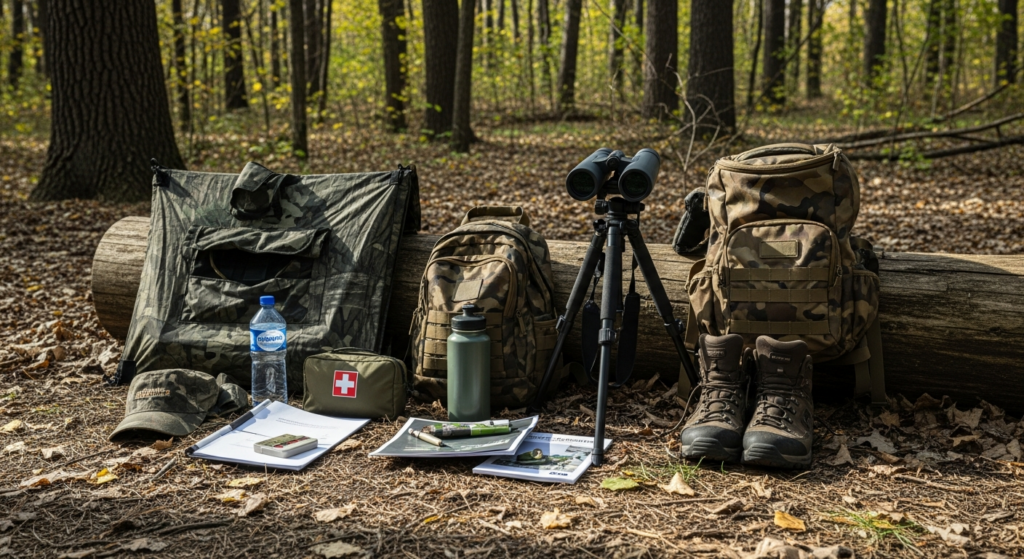
Beyond the core equipment, the guide also addresses advanced mapping tools and general logistical preparations. An Xtra add-on, available for a monthly fee starting at $4, provides enhanced mapping capabilities. This includes detailed property boundaries, property information, property access details, and even landowner names and addresses, which can be invaluable for private land hunting coordination. The tool also offers shape and path drawing tools, custom pins for marking points of interest, and navigation features. Comprehensive checks of camping equipment are also recommended, covering tents, sleeping bags, pillows, camping-stove fuel, and cutlery, particularly for those planning multi-day hunts. General preparedness includes packing hunting clothing, appropriate packs, tags, sufficient snacks and water, valid licenses, and a well-stocked first-aid kit. Coordinating with private landowners well in advance is crucial for ensuring access and maintaining good relationships. Finally, the guide underscores the importance of physical conditioning, recognizing that hunting can be physically demanding, especially in varied terrain.
Why it matters in Hilton Head Island
For residents of Hilton Head Island and the wider Beaufort County area, where outdoor pursuits are a significant aspect of regional life, adherence to rigorous preseason hunting preparations is not merely a recommendation but a foundational practice. With large tracts of land in the Lowcountry supporting diverse wildlife populations, including deer, responsible hunting contributes to ecological balance and safety. Military personnel stationed at nearby Marine Corps Recruit Depot Parris Island and Marine Corps Air Station Beaufort, many of whom engage in hunting as a recreational activity, also benefit from these guidelines, ensuring their readiness and safety in the field. The detailed approach to equipment, safety, and scouting outlined in the guide helps to mitigate risks and promote ethical practices, safeguarding both participants and the natural environment that defines much of the Hilton Head Island experience.