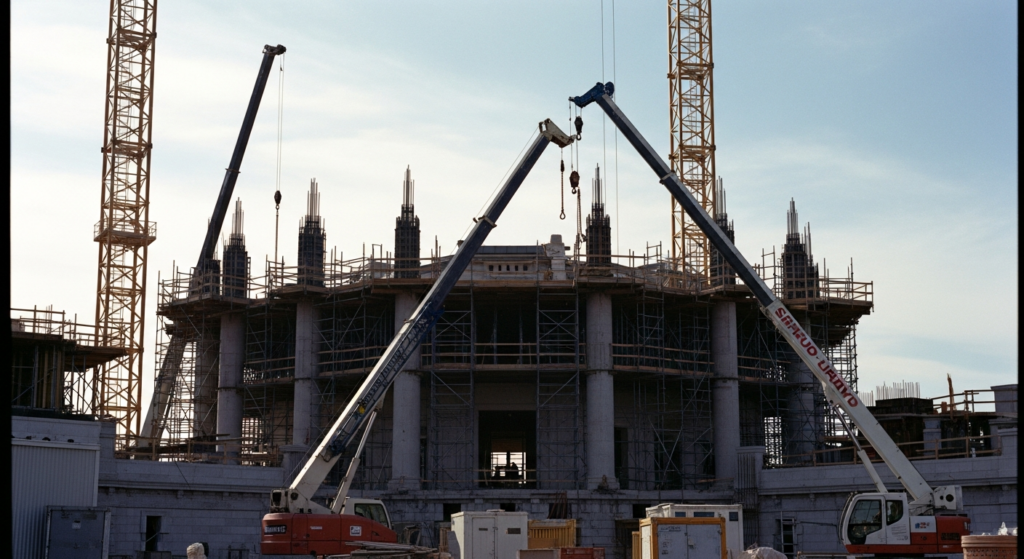
A federal appeals court has ordered the Trump administration to halt aboveground construction of a planned $400 million, 90,000-square-foot ballroom at the White House, ruling that the President lacks unilateral authority for the project and requires congressional authorization.
The 2-1 decision from a panel of the U.S. Court of Appeals for the District of Columbia Circuit came down on Friday, August 7, 2026, and represents a significant check on executive power. The court’s ruling specifically states that Congress must approve the project, which was intended for the site of the demolished East Wing.
Judges Patricia Millett, nominated by Barack Obama, and Bradley Garcia, nominated by Joe Biden, formed the majority in the decision. Judge Neomi Rao, a Trump nominee, dissented. The appeals court has stayed its ruling for 14 days, allowing the administration time to appeal the decision to the U.S. Supreme Court.
The National Trust for Historic Preservation initiated the legal challenge, suing the administration in December 2025, approximately one week after the demolition of the East Wing was completed. The proposed ballroom was designed to accommodate up to 999 people.
Congressional opposition to the project has been evident. Lawmakers rejected the administration’s request for $1 billion in funding for the ballroom in May. In June, Democratic members of Congress raised concerns that $350 million from a recent tax cuts law appeared to have been redirected to fund the project without proper authorization. Despite these legislative hurdles, the planned project had received final approval from the 12-member National Capital Planning Commission on April 2.
Notably, the court’s ruling does not prohibit all work on the site. Underground construction, including for bunkers, military installations, medical facilities, and other national-security facilities, is permitted to continue. The distinction highlights the court’s focus on the specific nature of the aboveground ballroom as a project requiring legislative consent.
Why it matters in Hilton Head Island
The federal appeals court’s decision, while centered on the White House, resonates with broader questions of federal authority and fiscal oversight that can impact communities with a significant federal presence, including Hilton Head Island. Beaufort County, home to major federal installations such as Marine Corps Recruit Depot Parris Island and Marine Corps Air Station Beaufort, relies on clear lines of accountability within the federal government for everything from infrastructure projects to operational funding. The court’s emphasis on congressional authorization for major executive projects underscores the legislative branch’s role in guiding federal spending and development, a principle that affects how federal resources are allocated and managed across the nation, including within the Lowcountry region and for the residents of Hilton Head Island.