
How to Choose the Best Roofing Insulation for Energy Efficiency and Comfort
Proper roofing insulation is essential for maintaining a comfortable indoor environment while promoting energy efficiency. It can significantly reduce heating and cooling costs, minimize energy consumption, and improve overall comfort in your home or building. Selecting the best roofing insulation involves an understanding of various materials, methods, and performance factors. This guide will provide a comprehensive overview to aid in making an informed decision.
Understanding Roofing Insulation
Roofing insulation is designed to provide a barrier that reduces heat flow into and out of the building. It acts as a thermal blanket, maintaining consistent temperatures inside your property and thereby enhancing energy savings. The effectiveness of insulation is measured by its R-value, which represents its resistance to heat transfer. The higher the R-value, the more effective the insulation will be at preventing heat loss.
Types of Roofing Insulation
1. Fiberglass Insulation
Fiberglass insulation is one of the most common types used in both residential and commercial settings. It is made from tiny glass fibers and is typically available in batts or loose-fill forms. Key advantages include:
- Good thermal performance with R-values ranging from 2.9 to 4.3 per inch.
- Non-combustible, providing fire resistance.
- Cost-effective and widely available.
2. Foam Board Insulation
Foam board insulation, also referred to as rigid foam, is manufactured using polystyrene or polyurethane. It provides a high R-value and is ideal for various applications, including roofs, walls, and foundations. Benefits include:
- High thermal resistance, offering R-values between 3.8 and 6.5 per inch.
- Moisture resistant, reducing the risk of mold growth.
- Lightweight and easy to install, often fitting around complex shapes.
3. Spray Foam Insulation
Spray foam insulation expands on application, filling gaps and creating a continuous thermal barrier. It consists of two components that are mixed and sprayed onto surfaces. Advantages include:
- Very high R-value, with closed-cell foam reaching up to 7.0 per inch.
- Excellent air sealing properties, minimizing drafts.
- Long-lasting, with minimal degradation over time.
4. Cellulose Insulation
Cellulose insulation is primarily made from recycled paper products. It is treated with fire retardants and is an environmentally friendly option. Benefits of cellulose insulation are:
- R-values typically reaching about 3.2 to 3.7 per inch.
- Great for retrofitting existing buildings due to its loose-fill nature.
- Effective at reducing sound transfer between rooms.
5. Mineral Wool Insulation
Mineral wool, also known as rock wool or stone wool, is made from basalt rock and recycled slag. This type is gaining popularity due to its exceptional fire resistance. Key characteristics include:
- R-values generally ranging from 3.3 to 4.2 per inch.
- Natural moisture resistance that helps prevent mold development.
- Excellent soundproofing properties.
Factors to Consider When Choosing Roofing Insulation
1. R-Value Requirements
Consider the climate you live in when selecting insulation. Different regions necessitate varying R-values for optimal performance. The Department of Energy provides guidelines, recommending higher R-values in colder climates and lower values in warmer regions.
2. Climate and Location
Your geographic location significantly influences the type of insulation suitable for your roofing system. For example, areas with high humidity may require moisture-resistant materials to prevent mold growth. In contrast, homes in colder regions benefit from insulation with higher R-values.
3. Roof Type and Structure
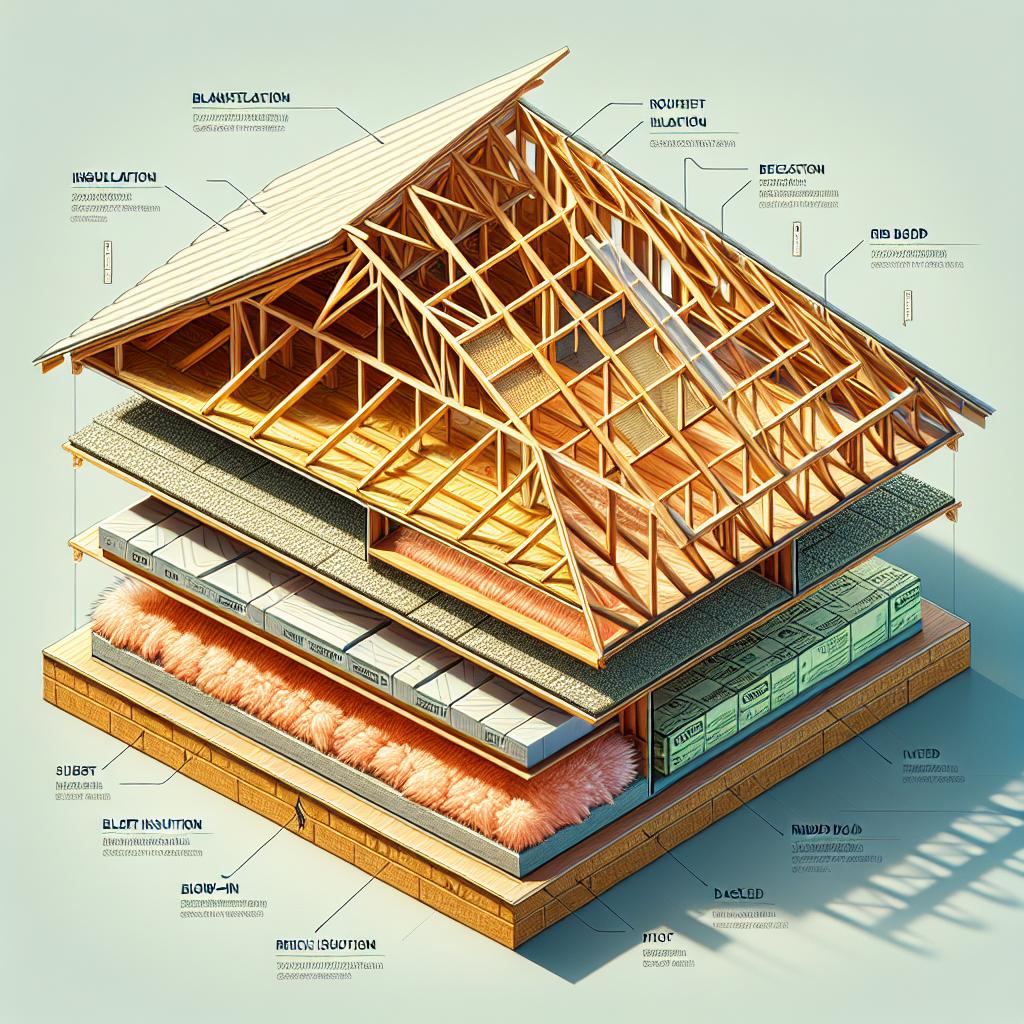
The design of your roof will affect insulation choices. Flat roofs may benefit more from rigid board insulation, while pitched roofs can accommodate fiberglass or spray foam insulation. Assess the roof’s structure before making a decision.
4. Installation Method
Different types of insulation may demand different installation methods and expertise. Some materials can be DIY-friendly, while others require professional installation. Understand your own capabilities and whether a contractor may be needed for the job.
5. Budget and Cost
Cost is a vital factor in selecting roofing insulation. Insulation material prices can vary significantly. While high-performance options may require a larger upfront investment, they can lead to cost savings in energy bills long-term. Always calculate the return on investment (ROI).
6. Environmental Impact
If sustainability is a priority for you, consider options made from recycled or renewable materials. Additionally, pay attention to the insulation’s impact on energy efficiency and overall carbon footprint.
Benefits of Good Roofing Insulation
1. Energy Efficiency
Effective roofing insulation diminishes the amount of energy required for heating and cooling, contributing to lower utility bills. A well-insulated roof can reduce energy consumption by up to 50% in some cases.
2. Enhanced Comfort
Quality insulation promotes a stable indoor temperature. This means a more comfortable living environment throughout the year, irrespective of external weather conditions.
3. Noise Reduction
Many insulation materials also provide sound-dampening properties, resulting in decreased noise pollution from outside. Particularly valuable in urban areas or near busy roads, this can greatly enhance residential comfort.
4. Increased Property Value
A well-insulated roof can boost your property’s market value. Prospective buyers often look for energy-efficient homes that promise long-term savings and increased comfort.
Common Mistakes to Avoid
1. Underestimating R-Value Needs
Choosing insulation with insufficient R-value can lead to ineffective thermal barriers. Always refer to local guidelines and standards to ensure optimal insulation performance.
2. Skipping Professional Consultation
While DIY projects can be gratifying, consulting with professionals can provide insights that may enhance your insulation’s effectiveness. Seek expert advice tailored to your home’s specific requirements.
3. Ignoring Ventilation
Efficient roofing insulation should always be paired with proper ventilation. Poor ventilation can lead to moisture buildup, damaging both insulation and the roof structure over time.
4. Neglecting to Compare Products
Do thorough research and compare various insulation products in terms of R-value, installation method, cost, and durability before making a final decision. This can aid in finding the most fitting option for your home.
Conclusion
Choosing the best roofing insulation for energy efficiency and comfort is a critical decision. By carefully considering various types of insulation, their unique benefits, and essential factors like R-value, budget, climate, and roof type, homeowners can make informed choices that promote not only comfort but also significant long-term savings. Always prioritize quality and avoid common pitfalls to ensure a successful insulation project that contributes to a healthier, more efficient living space.

Author: STAFF HERE HILTON HEAD
The HILTON HEAD STAFF WRITER represents the experienced team at HEREHiltonHead.com, your go-to source for actionable local news and information in Hilton Head Island, Beaufort County, and beyond. Specializing in "news you can use," we cover essential topics like product reviews for personal and business needs, local business directories, politics, real estate trends, neighborhood insights, and state news affecting the area—with deep expertise drawn from years of dedicated reporting and strong community input, including local press releases and business updates. We deliver top reporting on high-value events such as the RBC Heritage golf tournament, Hilton Head Island Wine & Food Festival, and the Gullah Celebration. Our coverage extends to key organizations like the Hilton Head Island-Bluffton Chamber of Commerce and Community Foundation of the Lowcountry, plus leading businesses in tourism and hospitality that power the local economy such as Sea Pines Resort and Sonesta Resort Hilton Head Island. As part of the broader HERE network, including HEREAiken.com, HEREBeaufort.com, HEREChapin.com, HERECharleston.com, HEREClinton.com, HEREColumbia.com, HEREGeorgetown.com, HEREGreenwood.com, HEREGreenville.com, HEREHiltonHead.com, HEREIrmo.com, HEREMyrtleBeach.com, HERENewberry.com, HERERockHill.com, and HERESpartanburg.com, we provide comprehensive, credible insights into South Carolina's dynamic landscape.
 Mays Contracting